 epoxyresin
A river table
Separate the seal coat, deep casting and finishing stages, then choose documented formulas for each job.
The independent resin reference
The right formula for your project. The right amount for your pour. Clear comparisons and useful tools, before you open the bottles.
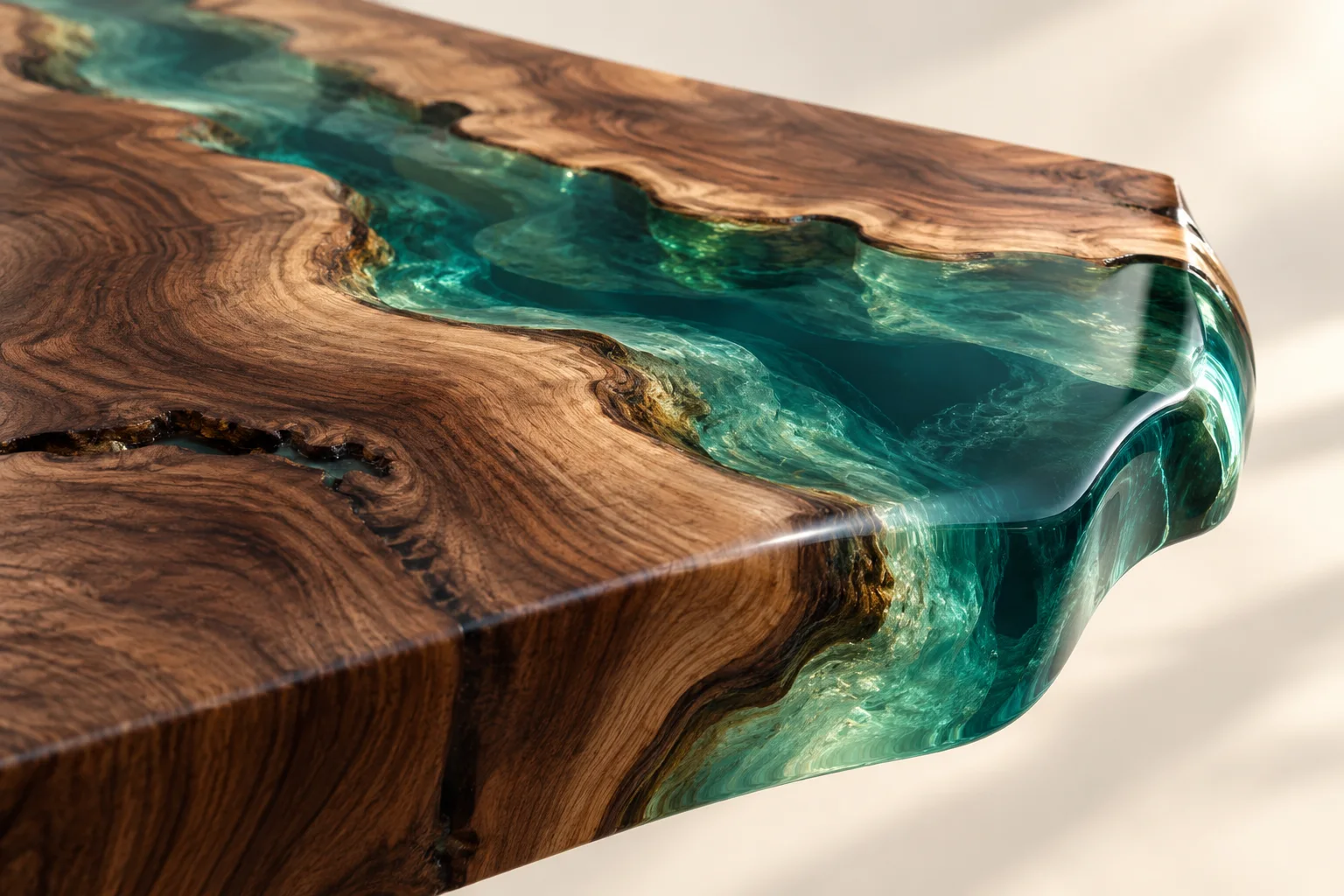
AI-created project inspiration · not product testing
One project. A clearer starting point.
Separate the seal coat, deep casting and finishing stages, then choose documented formulas for each job.
Understand seal coats, thin flood coats, edge runoff and cure schedules before choosing a tabletop resin.
Match a formula to thin artwork coatings or small molds, and plan mixing quantity and finishing time.
A little planning goes a long way
Enter your project dimensions. See the combined resin-and-hardener volume, add an allowance, then compare the kit quantities.
Open the resin calculator →Rectangle or circle · inches or centimeters · US gallons and liters
Example · a tabletop coating
0.65 liters
Approximately 21.9 US fl oz combined. Separate seal coats and runoff may need more. Check your resin’s layer limits.
Compare the details that matter
Explore 12 formulas and 41 exact kit options. Each formula has its own source notes and limitations.
As an Amazon Associate I earn from qualifying purchases. We may earn a commission from the paid links on this page. How affiliate links work.

TotalBoat · Coating
A thin-layer coating for tables and counters, with a small-casting exception that depends on both depth and volume.

TotalBoat · Deep pour
A slow casting system for substantial river pours and deeper molds, with minimum-volume and finishing-time considerations.

ArtResin · Art & craft
A thin-layer artwork resin mixed by equal volumes, with a documented distinction between touch-dry and full cure.
Learn once. Use it every pour.
Getting started
Choose a resin by project depth, working conditions and documented limitations before comparing kit sizes.
Read the guide →Getting started
Understand why a surface coating and a deep mold need different resin behavior, even when both cure clear.
Read the guide →Planning
Calculate mixed volume for coatings, molds and irregular rivers, then plan allowances without changing the mix ratio.
Read the guide →Confidence comes from specifics
We compare documented applications, mixing methods and practical limits. Where a manufacturer’s documents disagree, we show the uncertainty. We do not claim hands-on testing we have not performed.
Read our research methodology →Questions worth asking
Two-part epoxy combines resin and a compatible hardener to create a cured material. Coating and casting formulas have different working characteristics. Choose by project and the instructions for the exact system. Compare coating and casting epoxy.
Start with whether you are coating a surface or filling a mold. Then compare depth, total pour volume, workshop conditions and finishing schedule. Our Resin Finder makes a shortlist with limits and unknowns shown.
Only if the manufacturer specifies 1:1 by weight. A volume ratio cannot automatically be transferred to a scale. The mixing calculator keeps the two measurement methods separate.
Not if the remaining material goes unused or exceeds the manufacturer’s storage guidance. Compare the combined resin-and-hardener quantity, then use your own current price in the project cost calculator.
Read the instructions and safety data for both components before you begin. Batch mass, temperature and mold shape matter alongside thickness. Start with the handling and planning checklist.
Research and editorial direction by John Morris. Affiliate disclosure.