 epoxyresin
Treat the first flower as a sample
Flowers vary in thickness, structure, pigment and response to preparation. A process that looks good with one bloom may darken or distort another. Begin with spare flowers from the same batch and keep the irreplaceable ones aside until you have seen the completed result. Photographs before preparation provide a useful comparison.
Decide whether you want a pressed composition under a coating or a three-dimensional arrangement in a casting. The geometry determines the resin category, mold and pour plan. A deep block requires a casting system approved for its full dimensions; a coating resin is not made suitable simply by embedding a flower in it.
Dry before embedding
ArtResin’s flower guidance calls for drying flowers before they are embedded. Choose a drying method appropriate to the shape you want to retain, and follow that method’s instructions completely. A flower that feels dry on the outside may still contain moisture in a thick center or stem.
For a keepsake, prepare more flowers than you need so you can select the best preserved specimens. Store the prepared material in suitable dry conditions while the mold and resin are readied. Handle fragile petals gently, and plan the arrangement on a template before introducing liquid resin.

Compare a relevant resin kit
TotalBoat Fathom: check the selected 1.5 gallons kit, included components and current offer. Read the formula limits before choosing it for your project.
As an Amazon Associate I earn from qualifying purchases. We may earn a commission from the paid links on this page. How affiliate links work.
View 1.5 gallons kit on Amazon ↗Test appearance and any sealant
Use a small sample to compare the dried flower before and after contact with the intended resin. Check for translucency, darkening, color bleed and bubbles. If a sealant is part of your process, test that exact sealant and allow it to dry or cure completely according to its instructions before resin contact.
A sealant may help with porous material but is not a universal requirement or guarantee. It can itself change a delicate flower’s appearance. Do not substitute an unfamiliar craft coating immediately before the main pour because a different product worked in someone else’s project. Save the successful sample and record the preparation used.
Plan placement and air escape
Lay out the composition at full size and photograph it so you can reproduce the spacing in the mold. Consider the viewing direction, the clear border around the flowers and the position of stems. Look for cupped petals or overlapping layers that could trap air when the resin rises around them.
Flowers may move or float before the resin firms. Use only a compatible, tested placement or staged-pour method, and keep each stage within the resin’s layer and recoat instructions. A hidden attachment method still needs to be chemically compatible and visually acceptable once the block is viewed from the side.
- Pressed flowers: check flatness, color change and air beneath overlapping petals.
- Thick blooms: check complete drying and trapped spaces around the center.
- Clear block: plan all viewing faces, not just the top view.
- Sentimental bouquet: complete a representative spare-flower sample first.
Pour within the product’s limits
Measure and mix the resin exactly as directed, then follow the approved pour plan. Observe the first sample for air around petal edges and stems. Do not repeatedly heat a delicate inclusion to chase every bubble, and do not exceed a permitted layer depth to cover a bloom in one operation.
Protect the piece through the specified cure and demold carefully. Assess the complete sample before scaling up. Changes in casting size can change cure behavior, so the final larger mold still needs its own depth and volume check even if the small sample looked successful.
Preservation does not mean permanence
Keep expectations realistic: embedding a flower does not guarantee its original color or appearance forever. Resin and organic material can change over time, and sunlight and heat restrictions still apply. Retain digital photographs of meaningful flowers and give the finished piece care guidance based on the actual resin system. Do not use a keepsake casting as a hot plate or food-contact object unless its complete material system is documented for that use.
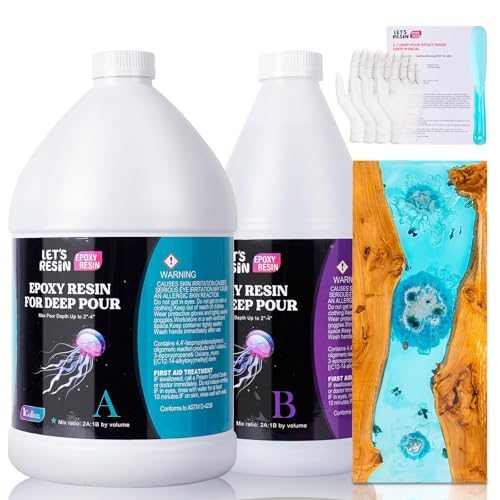
Choose the formula, then the kit size
LET'S RESIN Deep Pour Epoxy: check the selected 1.5 gallons kit, included components and current offer. Read the formula limits before choosing it for your project.
As an Amazon Associate I earn from qualifying purchases. We may earn a commission from the paid links on this page. How affiliate links work.
View 1.5 gallons kit on Amazon ↗Sources & further reading
- ArtResin: preparing and embedding dried flowers
- ArtResin: preventing resin bubbles
- EcoPoxy product support and FAQs
- ArtResin: resin care instructions
Manufacturer documents can change. Match the full formula name and kit instructions. This page is based on document research, not our own product testing.